Digital Nomad Bali: Work from Bali and save money during your workation
- Britt Mak
- Aug 7
- 8 min read

Updated: Aug 11
Do you dream of living abroad for a year after graduating, while continuing to work and maybe even saving some money along the way? Then a workation in Bali might be exactly what you're looking for.
More and more young people are choosing not to start their careers in the Netherlands straight after graduation, but instead to spend some time working from abroad. Thanks to remote work, this is easier than ever. Bali has become one of the most popular destinations in the world for digital nomads.
And for good reason.
In this blog, you'll learn everything you need to know about the Digital Nomad Visa for Bali, the cost of living in Bali, the best places to live, and why more and more Dutch people are choosing to spend a workation on this beautiful island.

What Is a Digital Nomad?
A digital nomad is someone who works remotely and is therefore not tied to one fixed workplace.
As long as you have a laptop and a reliable internet connection, you can work from almost anywhere in the world. Think of jobs in customer service, administration, marketing, software development, online sales, or running your own business.
Instead of commuting to the office every day, you can start your workday from a sunny café, a coworking space, or even by the pool at your accommodation.
And after work? Hop on your scooter, head to the beach, and watch the sun set over the ocean.
That’s exactly why so many people choose a Digital Nomad Bali adventure.
Why Is Bali So Popular Among Digital Nomads?
There are plenty of beautiful places around the world to work remotely, but Bali has remained one of the most popular destinations for years.
That’s because of its unique combination of:
Tropical climate
Affordable lifestyle
Beautiful nature
Friendly Balinese people
Reliable internet connection
Plenty of coworking spaces
Large international community
Relaxed atmosphere
Whether you love surfing, working out, yoga, great food, or meeting new people, there’s always something to do in Bali.
Can You Save Money While Living in Bali?
Many people think that spending a year in Bali will only cost them money.
In reality, it can actually be surprisingly attractive financially.
Imagine working remotely for a Dutch company and earning around €2,500 net per month.
Depending on your lifestyle, you can live comfortably in Bali for significantly less than you would spend in the Netherlands. A comfortable room often costs between €400 and €700 per month, while eating out, transportation, and everyday groceries are generally much cheaper too.
Bali is also an island where you can make your lifestyle as expensive or as affordable as you want. If you eat at trendy cafés every day or regularly enjoy cocktails at luxury beach clubs, your expenses can quickly add up. But if you choose to eat at a local warung regularly, you can often get a plate of nasi goreng or mie goreng for around €1. Even supermarkets in the Netherlands can hardly compete with that. Transportation is cheap too. A full tank of fuel for your scooter costs around 25,000 Indonesian rupiah (approximately €1.50) and, depending on how much you drive, can often last you almost a week.
You can also see this difference reflected in local incomes. The average net monthly income in Bali is around 4 million Indonesian rupiah, which is approximately €190 to €200 per month. By comparison, the average net monthly income in the Netherlands is around €3,300 per month. The cost of living in the Netherlands is also, on average, more than 60% higher than in Bali. This shows just how affordable many local products and services can be when you choose to live more like a local.
As a result, many digital nomads are able to save a significant amount of money each month.
Some save a few hundred euros per month, while others manage to save more than €1,000 per month. How much you ultimately save, of course, depends on your income and the lifestyle choices you make.
So you’re not only gaining valuable work experience, but you can also save money towards your own home, a trip around the world, or your next business venture.
A Community of Like-Minded People
You might be wondering whether you’ll feel lonely if you move to Bali on your own.
Fortunately, the opposite is usually true.
Bali has one of the largest digital nomad communities in the world.
Almost every week, there are networking events, sports activities, group dinners, yoga classes, and other events where you can easily meet fellow remote workers.
Many people arrive in Bali on their own and eventually leave with friends from all over the world.
Internet and Coworking Spaces in Bali
A fast internet connection is, of course, essential when you work remotely.
Fortunately, Bali is very well set up for remote workers.
Especially in Canggu, Uluwatu, and Kuta, you’ll find plenty of cafés and coworking spaces with fast internet.
Coworking spaces are also ideal for meeting other entrepreneurs, freelancers, and remote employees. This way, you can stay productive while building an international network at the same time.

Can You Work as a Digital Nomad in Bali?
This is perhaps the most important question.
You are not allowed to work for an Indonesian company without the appropriate work permit. This means that working as a barista, photographer, or employee for a local business, for example, is not permitted on a tourist or digital nomad visa.
What you can do is work remotely for an employer or clients based outside Indonesia, for example in the Netherlands.
Always check the most up-to-date visa requirements before travelling to Bali.
Digital Nomad Visa Bali (E33G)
Due to the rapid growth of remote work, Indonesia has introduced a special Digital Nomad Visa (E33G).
The exact requirements may change, but currently applicants are generally required to provide:
A passport that is valid for at least 6 more months.
A bank statement showing a minimum balance of EUR 1,800 over the past three months.
Proof of an annual income of at least EUR 55,000.
An employment contract with an employer based outside Indonesia.
A recent curriculum vitae (CV).
A travel itinerary.
Details of your accommodation.
A recent passport photo.
Always check the latest requirements before submitting your application.
Visa on Arrival (VOA)
Would you like to experience the digital nomad lifestyle first and see if it’s right for you?
Then a Visa on Arrival (VOA) is often a great option.
With a VOA, you can:
Stay in Indonesia for 30 days;
Extend your visa once for another 30 days;
Stay in Bali for a maximum of 60 days.
Perfect if you want to find out whether working remotely from Bali is right for you before committing to a longer stay.
The Best Places to Live as a Digital Nomad in Bali
Each area of Bali has its own unique character.
Canggu
Canggu is the hotspot for digital nomads.
You’ll find plenty of coworking spaces, trendy cafés, restaurants, gyms, and international entrepreneurs here.
It’s the perfect place if you want to meet lots of new people.
Uluwatu
Do you love surfing and prefer a more laid-back environment?
Then Uluwatu is a fantastic choice.
You’ll find impressive cliffs, beautiful beaches, and an increasing number of coworking spaces.
Kuta
Kuta is often underestimated.
Thanks to its central location, you’re close to the airport, have plenty of amenities nearby, and can easily explore the rest of Bali. It’s also home to our first Bali Base Living location, which means you can immediately become part of a welcoming community.
Why Choose a Community Instead of a Hotel?
Many people book a hotel or Airbnb. It may seem convenient at first, but after a few weeks, you’ll often notice that you don’t have much contact with other people.
Especially when you’re staying in Bali for a longer period of time, being part of a community can make a huge difference.
Working together, exercising together, grabbing a coffee, going on weekend trips, or simply having someone to share a meal with. These are the things that make living in Bali so much more enjoyable.
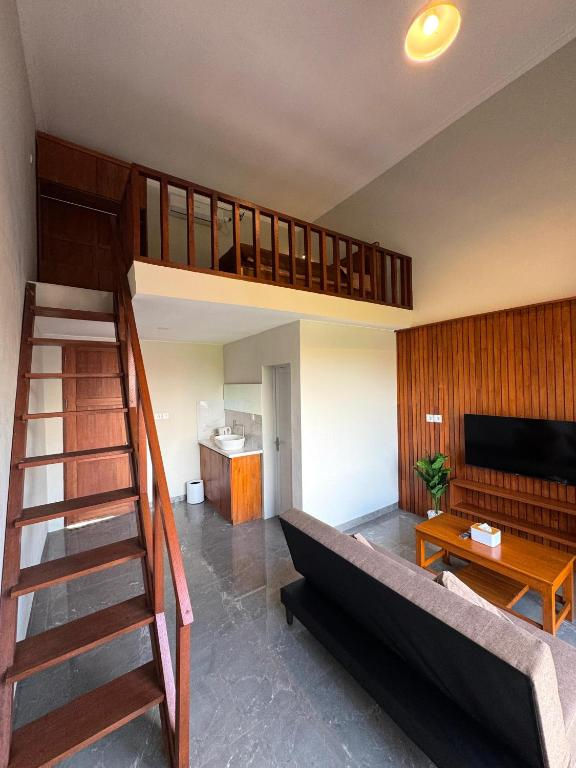
Accommodation at Bali Base Living
At Bali Base Living, we believe your accommodation should be much more than just a room.
We’ve designed our accommodations especially for students, interns, and digital nomads who are staying in Bali for a longer period of time.
With us, you’ll get:
Your own private bedroom.
A private bathroom.
Air conditioning.
Fast Wi-Fi.
A shared kitchen.
A swimming pool.
Weekly cleaning.
Balinese staff on-site.
A Dutch point of contact before departure and throughout your stay.
A local point of contact in Bali.
The biggest advantage?
You’ll live together with other international students and digital nomads, making it easy to meet new people from day one.




Is a Workation in Bali Right for You?
Spending a year in Bali is about so much more than sunshine, beaches, and palm trees.
You’ll grow personally, build international friendships, gain valuable work experience, and discover a completely different culture.
Maybe you’ll return home with a nice amount of money saved.
Maybe you’ll discover your dream job.
Or maybe you’ll simply come back with a backpack full of memories and experiences that will stay with you for the rest of your life.
Either way, a workation in Bali is an adventure you’ll never forget.
Frequently Asked Questions About Digital Nomad Bali
Can you work for a Dutch company from Bali?
Yes. You can work remotely for an employer or clients based outside Indonesia. Working for an Indonesian company is not permitted without the appropriate work permit.
Can you save money while living in Bali?
That mainly depends on your lifestyle. If you choose luxury beach clubs, Western restaurants, and lots of trips and activities, your monthly expenses can quickly add up. But if you live more like the locals, Bali can be surprisingly affordable.
As a digital nomad, you can roughly expect the following monthly costs:
Accommodation: €400 to €700 for a comfortable room with a private bathroom and air conditioning.
Food: At a local warung, you can often enjoy a freshly prepared meal, such as nasi goreng or mie goreng, for around €1 to €3. Western restaurants are generally more expensive.
Transportation: A full tank of fuel for a scooter costs around 25,000 Indonesian rupiah (approximately €1.50). Depending on how much you drive, this can often last you almost a week.
Internet: Fast Wi-Fi is included at most accommodations, cafés, and coworking spaces.
You can also see this difference reflected in local incomes. The average net monthly income in Bali is around 4 million Indonesian rupiah, which is approximately €190 to €200 per month. By comparison, the average net monthly income in the Netherlands is around €3,300 per month. The cost of living in the Netherlands is also, on average, more than 60% higher than in Bali. This shows just how affordable many local products and services can be when you choose to live more like a local.
If you work for a Dutch or another European company and earn a salary comparable to Dutch salaries, there’s a good chance you’ll be able to save a significant amount of money each month. How much you ultimately save depends, of course, on your income and lifestyle, but many digital nomads find that their monthly expenses in Bali are considerably lower than in the Netherlands.
Bali is therefore a destination where you can make your lifestyle as expensive or as affordable as you want. While one person might dine at luxury beach clubs every evening, another can enjoy a meal at a local warung for just a few euros. That freedom is exactly what makes living in Bali so attractive to many digital nomads.
Is the internet in Bali good enough for remote work?
Yes. Especially in Canggu, Uluwatu, and Kuta, you’ll find fast internet connections, modern coworking spaces, and plenty of cafés where remote working is very common.
What Is the best place for digital nomads in Bali?
That depends on what you’re looking for.
Canggu: The largest digital nomad community and plenty of coworking spaces.
Uluwatu: More laid-back and especially popular among surfers.
Kuta: Centrally located, affordable, and an ideal base for exploring Bali.
What Visa do I need to work remotely from Bali?
For a short stay, many people choose a Visa on Arrival (VOA). If you want to stay longer and meet the requirements, the Digital Nomad Visa (E33G) can be a good option.
Ready for Your Workation in Bali?
Do you dream of working from Bali for a while, meeting new people, and experiencing the freedom of remote work at the same time?
At Bali Base Living, you’ll not only stay in comfortable accommodation with your own private room, private bathroom, fast Wi-Fi, and a swimming pool, but you’ll also become part of a community of students and digital nomads. And with both a Dutch and a local point of contact, you’ll always have someone there to support you.
Curious which location suits you best? Feel free to get in touch or explore our accommodations. Who knows, you might soon be working on your laptop under the Balinese sun.


Comments